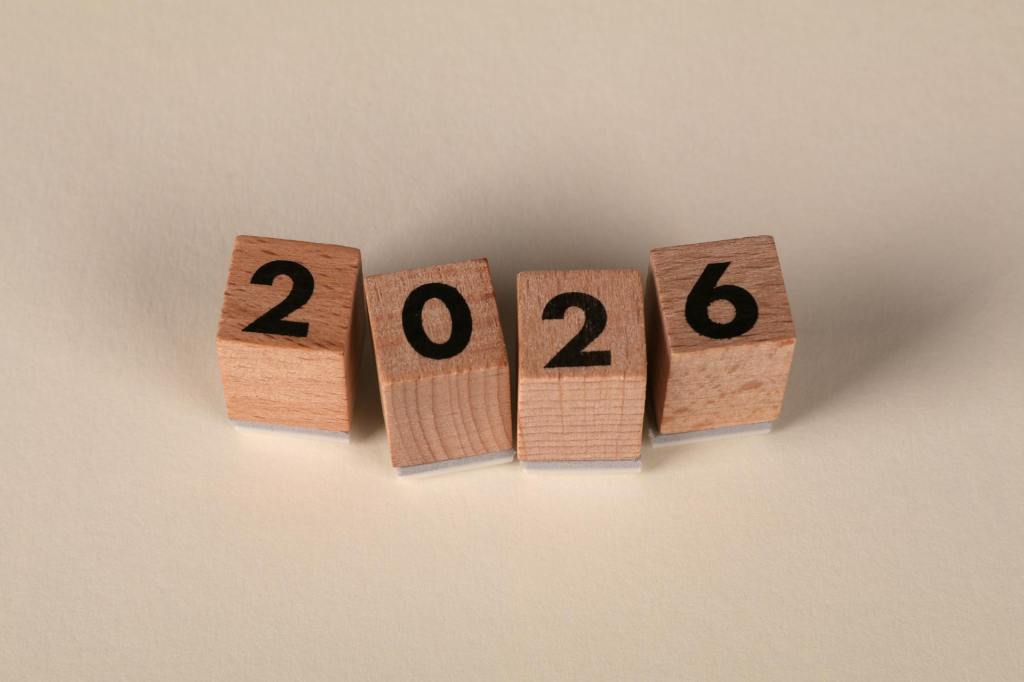
How are you doing with those New Year’s Resolutions? Fewer and fewer people make them every year. According to Pew Research, only about 30% of Americans make at least one resolution. Less than a month into the new year, 87% of those who make them say they have already failed to keep them. Resolutions don’t seem to be working well.
This time of year carries a bit of pressure. We often look back on the year that is past and think, I need to be different, I need to be better, I need to lose weight, I need to advance my career… I should… We have a new calendar, a new year, a clean slate. All those days are blank. How should I best fill them? What goals should I set?
Doesn’t all this seem a bit tiring? If we’re honest, many of us arrive at January not energized but a bit frayed. We’re not that eager to reinvent ourselves, but relieved to just still be standing. I’m not sure the best approach is the try harder, aim higher, fix more, and become someone else–preferably by February.
Lately, I’ve found myself less interested in reinvention and more curious about rhythm.
Resolutions are daunting and mostly left behind quickly, leaving us with the guilt of unattained goals. So many resolutions are too big or too vague and we burn out quickly, soon settling into old routines and habits… the same routines that got us where we are now, sensing we’re not fully what and whom we want to be.
So, do we throw up our hands and give up? Or is there a better way?
That’s where, for me, the concept of rhythm comes to the rescue. Rhythm doesn’t ask for a new personality or a dramatic overhaul. It asks for repetition. Return. Attention. Where resolutions tend to focus on outcomes—what we will accomplish, eliminate, or achieve—rhythms shape how we live our days. They work quietly, below the surface, changing us not through force but faithfulness.
Rhythms aren’t flashy. That’s part of their genius.
A rhythm might be as simple as starting the day without immediately reaching for your phone. A short walk at the same time each afternoon. Five minutes of prayer, or silence, or journaling—not because you feel inspired, but because it’s Tuesday and this is what you do on Tuesdays. None of this looks impressive. That’s the point.
Rhythms respect human limits. They assume we’re creatures, not machines. They acknowledge that willpower is a thin resource and life will interrupt our best intentions. When a rhythm breaks—and it will—it doesn’t accuse. It simply waits for us to return.
This is why rhythms endure where resolutions often collapse. They don’t depend on intensity. They depend on presence.
Rhythms are deeply formative, giving shape to our days. They keep time from running us instead of the other way around. They create small containers where attention can settle and meaning can surface. Over time, they begin to do their work—not dramatically, not predictably, but faithfully. We look back months later and realize something has shifted. Not because we forced it, but because we stayed.
Of course, rhythms are not an excuse for stagnation. They are not about getting comfortable or avoiding hard change. They are about creating the conditions in which real change can happen—slowly, honestly, without self-contempt. Some changes still require courage and decision. But even courage needs a place to land. Rhythms give it that place.
So perhaps the question at the start of a new year isn’t, “What should I fix about myself?” Maybe it’s simpler, and harder: “What rhythms would help me stay present to the life I sense God is calling me to live?”
New rhythms won’t give you a new you. But over time, they can quietly shape you into the person God is calling you to become—steadier, freer, and more fully alive in the life you’ve been given.







 Flourishing Life
Leave a comment