We tend to think of sin as rule-breaking. And sin is that. Sin is disobedience. Sin is rebellion against God. But if we stop there, we make sin too small. Scripture gives us a different picture. Sin isn’t just the violation of a commandment. Sin is the rupture of communion. It is not merely doing wrong things. It is becoming disordered people.
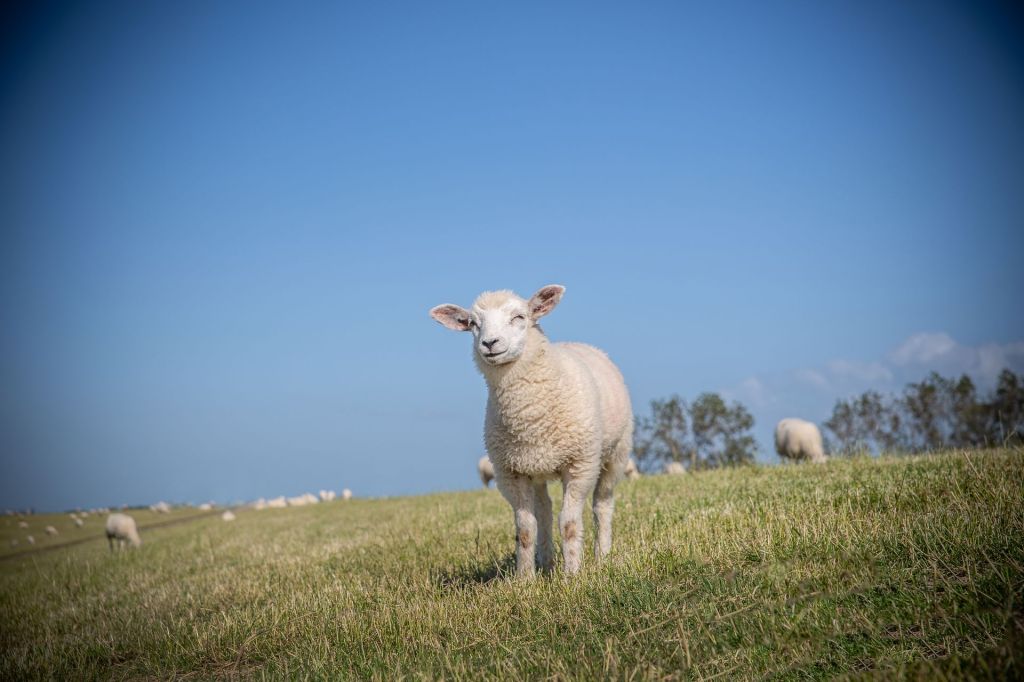
Sin is the sheep wandering away from the Shepherd and then convincing himself that the wilderness is freedom.
One of the most important images in Scripture is the image of wandering sheep:
Isaiah says: “All we like sheep have gone astray; we have turned—every one—to his own way.” (Isaiah 53:6 ESV)
Here’s the key ph rase: “his own way.” Isaiah doesn’t say, “All we like criminals have broken the law,” though that could also be true. He says, “All we like sheep have gone astray.”
The image is not legal. It is relational. Directional. Pastoral. We’ve wandered from the Shepherd. And this gets to the heart of what sin really is.
Sin is not less than breaking God’s law. But it is more than breaking God’s law. Sin is refusing God’s loving leadership. It is turning from the Shepherd’s voice and choosing our own way.
In other words, sin is self-shepherding. It’s the creature saying to the Creator, “I know the way to life better than you do.” That’s not just a moral problem. It is a worship problem.
Biblical theologian, N. T. Wright, has argued that sin is rooted in what he calls a “failure of worship.” In Romans 1–3, the fundamental human problem is idolatry: a failure of worship that leads to all the other failures of human life. That’s a powerful way to put it. Sin begins when worship goes wrong.
We need to be careful about the order. Pride is the root. Pride is the original refusal of creaturely dependence. Pride says, “I don’t need God to define what is good. I don’t need God to tell me who I am or what I am for. I can determine that for myself.” When pride takes hold, that’s worship bending inward.
The self moves to the center. The self becomes the authority. The self becomes the measure of truth. The self becomes the one who defines good and evil. The self becomes the shepherd. That’s what happened in the garden. Adam and Eve weren’t merely breaking an arbitrary rule about fruit. The deeper issue was trust and authority.
God placed them in a good world. He gave them life, vocation, communion, and abundance. But the serpent’s temptation was aimed at the heart of their relationship with God.
“Did God actually say?” That’s not an innocent question. It’s designed to loosen trust. Then comes the deeper temptation: “You will be like God, knowing good and evil.”
In other words: You don’t need God to define the good for you. You don’t need an outside authority determining what leads to life. You can seize that authority for yourself.
That’s pride. That’s a failure of worship. That’s self-shepherding.
Adam and Eve reached for the right to determine good and evil apart from God. They weren’t just violating a rule; they were rejecting creaturely dependence. They were saying, in effect, “We don’t need the Shepherd. We can shepherd ourselves.”
This is still the pattern of sin.
Sin says:
“I will lead myself.”
“I will define myself.”
“I will determine what is good.”
“I will decide what leads to life.”
“I will be my own shepherd.”
Sheep aren’t made to shepherd themselves. That’s not an insult. It’s just reality. We’re creatures. We’re dependent. We’re finite. We’re not wise enough, strong enough, holy enough, or whole enough to carry the burden of being our own gods.
And yet that is exactly the burden sin places on us. When worship turns inward, desire becomes disordered. This is why sin is not simply about wanting bad things. Often sin begins when we take good things and love them wrongly.
Approval is good. But when approval is ultimate, we become enslaved to other people’s opinions.
Pleasure is good. But when pleasure is ultimate, it becomes addiction.
Achievement is good. But when achievement is ultimate, people become tools.
Freedom is good. But when freedom is self-rule, it becomes isolation with better branding.
Safety is good. But when safety is ultimate, fear becomes our shepherd.
Justice is good. But when justice is detached from holiness, mercy, and truth, it becomes self-righteousness baptized in moral language.
Even religion can become disordered. We can use religious performance to avoid surrender. We can use doctrine to avoid love. We can use ministry to avoid communion with God.
That’s how subtle sin is.
Sin doesn’t always begin by making us love obviously evil things. Often it begins by making us love good things out of order.
Created gifts become substitute gods. And substitute gods become cruel shepherds. They promise life, but they can’t give it. They promise freedom, but they can’t sustain it. They promise identity, but they can’t secure it. They promise peace, but they can’t deliver it.
No created thing can bear the weight of worship. Idolatry always dehumanizes. When we worship what is less than God, we become less than what God created us to be.
If we worship power, we become ruthless. If we worship pleasure, we become enslaved. If we worship approval, we become anxious. If we worship control, we become fearful. If we worship self-expression, we become curved inward. If we worship politics, we become tribal. If we worship success, we become exhausted. If we worship ourselves, we become lost.
That is Isaiah’s diagnosis: “All we like sheep have gone astray; we have turned—every one—to his own way.”
Every one. Not just the obviously rebellious. Not just the publicly scandalous. Not just the people whose sins are easy to recognize from a distance. All of us.
Some wander through rebellion. Some wander through ambition. Some wander through resentment. Some wander through addiction. Some wander through religious pride. Some wander through bitterness. Some wander through distraction. Some wander through comfort. Some wander through the endless project of self-definition.
The paths look different, but the movement is the same. We turn from God’s way to our own way. Lostness isn’t merely being in the wrong place. Lostness is being under the wrong shepherd.
In Luke 15, Jesus tells a story about a shepherd who has one hundred sheep. One gets lost. So the shepherd leaves the ninety-nine and goes after the one that is lost until he finds it.
We need to be careful here, because this story can become sentimental very quickly. We picture a fluffy little lamb wandering through a golden meadow while soft music plays in the background.
Lostness isn’t sentimental. A lost sheep isn’t romantically finding himself. A lost sheep away from the shepherd, away from the flock, away from pasture, away from protection, is exposed to danger. Lostness is not freedom. Lostness is peril.
In Jesus’ story, the lost sheep is still valuable. The sheep is lost, but it is not worthless. The sheep has wandered, but it has not ceased to matter. The sheep is in danger, but it is still beloved.
This is one of the greatest truths of the Gospel: lostness doesn’t erase worth.
Every human being is created in the image of God. Every person has eternal value and inherent worth. No matter how far someone has wandered from the loving leadership of Jesus, that person still matters to God.
But here’s another truth we must say with equal clarity: being loved by God doesn’t mean we are not lost.
Jesus does not affirm the sheep in its lostness.
He finds it. He lifts it. He carries it. He brings it home. That’s real compassion.
Much of our culture confuses compassion with affirmation. But Jesus shows us something deeper. He does not deny that the sheep is lost. He does not rename the wilderness “pasture.” He does not call danger “authenticity.” He does not pretend that wandering away from the Shepherd leads to life.
He goes after the sheep because lostness is not life. And when he finds the sheep, he carries it. That’s grace.
Grace does not pretend sin is harmless. Grace does not pretend lostness is freedom. Grace tells the truth about our wandering and then carries us home.
That brings us back to Isaiah 53.
Isaiah says: “All we like sheep have gone astray; we have turned—every one—to his own way.”
But the verse does not end there. It continues: “And the Lord has laid on him the iniquity of us all.”
That is the Gospel in one sentence.
We turned to our own way. The LORD laid our iniquity on him. The sheep wandered. The Shepherd suffered. The sheep chose self-shepherding. The Shepherd gave himself for the sheep.
And that is exactly what Jesus says in John 10: “I am the good shepherd. The good shepherd lays down his life for the sheep.”
This is where the image of Jesus as the Good Shepherd becomes so powerful. The shepherd image is not soft sentimentality. In the ancient world, shepherding was an image of leadership, authority, protection, provision, and rule. Kings could be described as shepherds because they were responsible to guard, guide, and govern their people.
Jesus transforms the image. He’s not merely the Shepherd who rules. He’s the Shepherd who lays down his life. He’s not merely the King who commands the flock. He’s the Shepherd who becomes the sacrifice for the flock.
The ancient world knew about shepherd-kings. But in Jesus, we meet the Shepherd-King who becomes the Lamb.
The one who leads us is the one who dies for us. The one whose voice commands us is the one whose love saves us. The one who calls us to follow is the one who first comes to find us.
The Gospel doesn’t begin with our search for God. It begins with God’s search for us.
Repentance is more than feeling bad about sin. Repentance is returning to the Shepherd. It’s turning from my own way back to his way. It’s laying down the exhausting burden of self-shepherding and admitting, “I was not made to be my own god. I was not made to define good and evil for myself. I was made to live under the loving leadership of the Good Shepherd.”
The tragedy of sin is that we wander from the One who made us, knows us, loves us, and leads us. But the beauty of the Gospel is that the Shepherd does not abandon wandering sheep. He seeks us, finds us, carries us, and restores us.
So the question isn’t merely, “Have I broken God’s commands?” That question matters, but there is a defining question beneath it: Where have I wandered from the Shepherd? Where has pride bent my worship inward? Where have I trusted my own voice more than the voice of Jesus?
Every one of us is being shepherded by something. Our desires, fears, wounds, ambitions, appetites, culture, politics, and pride are all ready to lead us. The question is whether the one leading us loves us enough to lay down his life for us.
Jesus says, “I am the good shepherd. The good shepherd lays down his life for the sheep.”
That is our hope. Not that we never wandered. Not that our own way worked out. Not that we finally learned how to shepherd ourselves. Our hope is that the Good Shepherd came for wandering sheep.
So stop calling the wilderness freedom. Stop carrying the burden of being your own shepherd. Return to Jesus.
Sin is wandering from the Shepherd, salvation is being found by him, and discipleship is learning to follow the voice of the One who laid down his life for the sheep.







 Flourishing Life
Leave a comment